

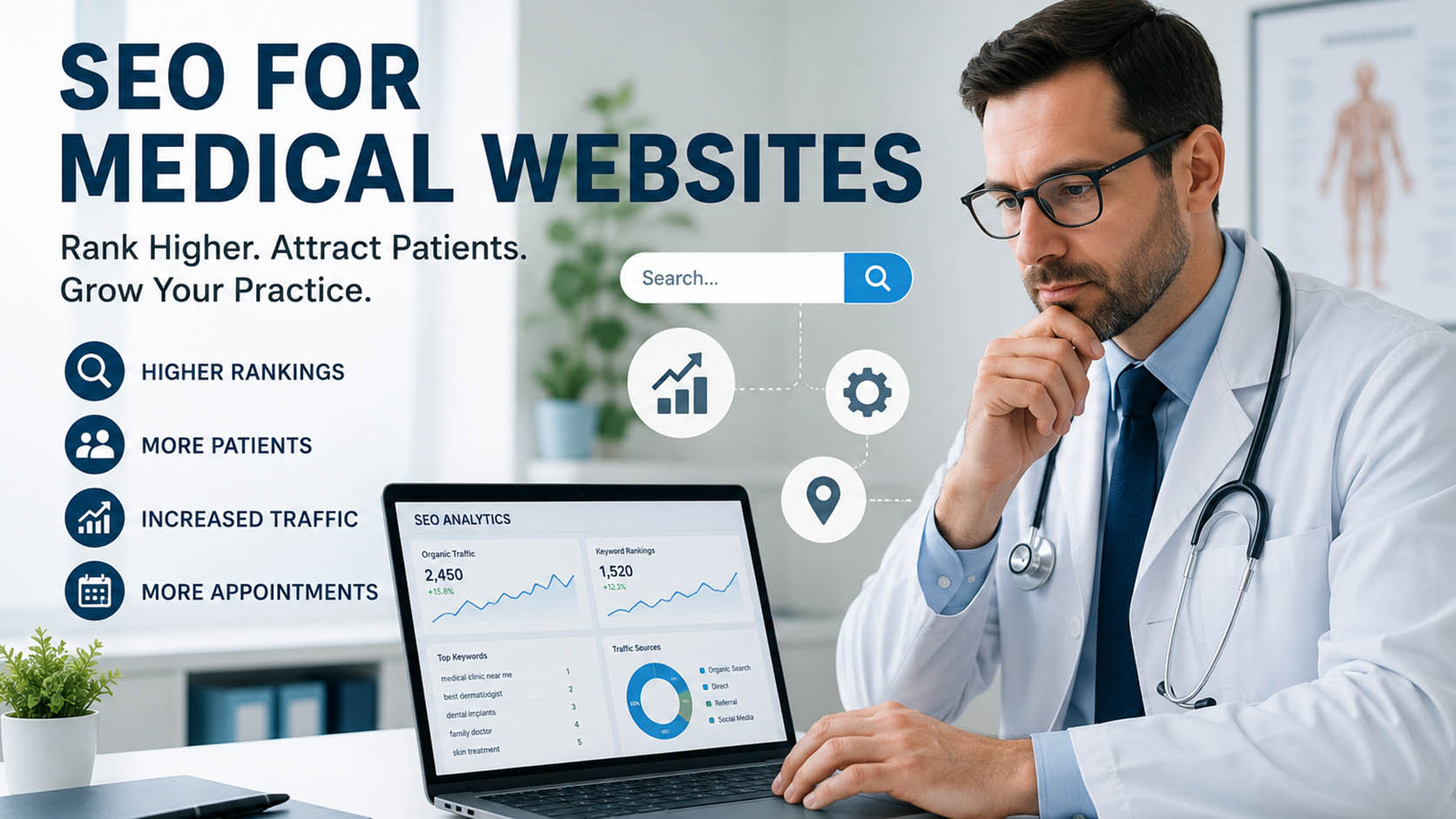
SEO for Medical Websites: What Actually Drives Patients (Not Just Traffic)
Most clinics think SEO is about “ranking on Google.”
It is not.
It is about turning search into booked appointments.
And this is where most medical websites fail.
They either:
- rank but don’t convert
- or never rank at all because they are built like brochure sites
Let’s break what actually works based on real patterns seen across clinics, dentists, and private practices.
Why Most Medical Websites Don’t Rank
The problem is not competition.
It is structure.
Typical issues:
- No service page depth
- No location targeting
- Weak internal linking
- Generic content written for “everyone”
- No authority signals
A clinic website is not a business card.
It needs to behave like a search engine asset.
That is exactly where SEO for medical websites becomes a different game compared to normal SEO.
The 3-Layer SEO System That Works for Medical Sites
1. Service Intent Pages
You need pages built for intent, not just information.
Example:
Instead of:
“Services”
You need:
- Dental implants London
- Skin treatment clinic Manchester
- Private GP consultation Birmingham
These pages convert because they match what users search.
If your site does not have this structure, you are already losing.
2. Authority Through Content Clusters
Google does not trust single pages.
It trusts ecosystems.
That is why blogs like this support your main services.
For example:
- This blog supports your core medical SEO positioning
- It strengthens topical relevance across your domain
If you are not building content clusters, you are invisible long term.
3. Conversion Optimization Layer
Ranking means nothing if users don’t convert.
Most clinics ignore:
- page speed
- CTA placement
- trust signals
- doctor credibility
This is why combining SEO with CRO is critical.
A proper medical SEO services strategy always includes conversion improvements.
Real Example: What Changed Rankings for a Clinic
One clinic had:
- 15 pages
- no blog
- no internal linking
After restructuring:
- added 10 service-specific pages
- built 2 supporting blogs
- improved internal linking
Result:
- traffic increased within 60 days
- more importantly, appointment bookings doubled
Why?
Because the site finally aligned with how patients search.
Internal Linking: The Hidden Ranking Driver
Most people ignore this.
But internal links tell Google:
- which pages matter
- how topics connect
For example, this blog should connect to:
- medical SEO (homepage authority)
- SEO for doctors (service intent page)
- SEO for dentists (niche targeting)
- website SEO audit (conversion entry point)
Without this structure, your site becomes disconnected.
What Makes SEO for Medical Websites Different
Healthcare is not like other industries.
Google applies stricter evaluation because of trust.
That means your site needs:
- real author credibility
- clear service expertise
- consistent topical focus
This is why random blogging or AI content does not work here.
You need strategy, not volume.
If you approach it like generic SEO, you will plateau fast.
When Should You Invest in SEO?
If your clinic:
- relies on referrals only
- depends heavily on paid ads
- has inconsistent bookings
Then SEO is not optional.
It becomes your most stable acquisition channel.
Especially when built properly through seo for medical practices level targeting.
The Biggest Mistake Clinics Make
Trying to rank homepage for everything.
This does not work.
Google ranks:
- specific pages for specific intent
If your entire strategy is:
“Let’s rank the homepage”
You are already stuck.
Final Insight
SEO for medical websites is not about hacks.
It is about building a structured system that:
- attracts the right searches
- builds trust
- converts patients
Once this is in place, rankings follow naturally.
FAQ
What is SEO for medical websites?
It is the process of optimizing clinic websites to rank on Google and convert visitors into patients through structured content and technical improvements.
How long does medical SEO take?
Typically 3 to 6 months depending on competition and site condition.
Is SEO better than paid ads for clinics?
SEO gives long term consistent traffic while ads give instant results.
Do doctors need SEO?
Yes, especially for local patient acquisition and reducing dependency on third party platforms.